About 122 minutes
Little Metacomet — A Closer Reading
Fantasy Juvenile Worlds
27,899 recorded words. 2 minutes difference from this book's estimate.
View Gutenberg source #75556
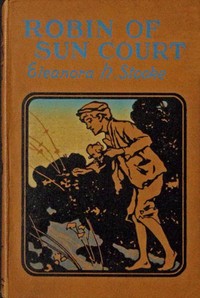
For Robin of Sun Court — Text and Context, the stored edition analysis reports 28,340 words, 2 hr 4 min estimated reading time, and 3 detected text sections.
The text analysis averages about 15.3 words per sentence, while the detected sections provide another way to judge how the source is divided.
Project Gutenberg metadata also associates the work with “Christian life -- Juvenile fiction,” connecting these edition facts with the source record’s subject description.
Explore this collection
These alternatives are selected using recorded categories and estimated reading time.
About 122 minutes
Fantasy Juvenile Worlds
27,899 recorded words. 2 minutes difference from this book's estimate.
View Gutenberg source #75556About 122 minutes
Fantasy Juvenile Worlds
27,933 recorded words. 2 minutes difference from this book's estimate.
View Gutenberg source #77051About 117 minutes
Fantasy Juvenile Worlds
26,847 recorded words. 7 minutes difference from this book's estimate.
View Gutenberg source #77024Search stored excerpts and compare books → Choose by your preferences →
Choices use stored catalog measurements. Estimates vary with reading speed. A shared category is a catalog label, not a claim that two books have the same argument or literary quality.
Search reads excerpt text stored with this catalog and links to its associated Gutenberg record. The connection is stored in the site database; this tool does not recheck that every excerpt is word-for-word identical to that external record. Excerpt search does not cover every chapter and does not verify historical publication dates.
Catalog snapshot checked: 2026-09-25. Coverage: 97 public books, 97 available source excerpts.
Read the complete public-domain text at its original source.
Read on Project GutenbergThe first chapter of Robin of Sun Court introduces its setting with a precise contrast: Sun Court is a Plymouth slum where sunlight enters only briefly each morning, yet a single potted wallflower in a cobbler's window becomes an emblem of beauty and integrity. The cobbler, Jasper Blamey, is described at his bench, whistling as he works, while a drunken man stumbles into the neighboring house—Robin's stepfather. This opening establishes a pattern of juxtaposing squalor with small, deliberate signs of order, and the wallflower recurs as a quiet motif. Readers should note how the narrator uses physical details—the court's layout, the window, the flower's scent—to imply moral distinctions without stating them outright.
The novel's first paragraph declares Sun Court “one of the worst slums in Plymouth” and notes its name was “ill-chosen” because sunlight visits only briefly. Yet the description immediately pivots to a wallflower in full bloom at a downstair window, “an object of beauty in the midst of much which was unsightly.” This is not mere scene-setting; the wallflower belongs to Jasper Blamey, the cobbler, who is introduced as one who “rose above the circumstances of his life.” The narrator explicitly compares such residents to hardy flowers that cannot be choked by weeds. For a first-time reader, this early equation of physical environment with moral character signals that the story will judge people by their resilience, not their address. The wallflower, the cobbler’s bench, and the brief morning sun all become touchstones for evaluating other characters—especially Robin’s stepfather, whose entrance is marked by a commotion that disturbs the cobbler’s sleep but does not surprise him.
In the later excerpt, a crisis unfolds around missing money that Robin had saved. His stepfather, Richard Burt, is initially suspected, but the dialogue reveals a more complicated dynamic. Burt insists he did not take the money, and Robin’s mother says she has been convinced of his innocence. Burt’s speech is notable for its self-awareness: “It’s no use saying I’m sorry I haven’t been steadier, for I don’t suppose you’d believe me—though it’s so.” He admits drink is to blame for his past violence but claims he has never harmed them sober. Robin’s response—“Why don’t you give up the drink?”—is met with a fatalistic “It’s too late in the day.” This exchange is the emotional core of the excerpt. Readers should observe how the author uses short, urgent sentences and interruptions to convey tension, and how Burt’s promise to never again lift his hand against his wife is framed as a religious appeal: “God help me to keep my word.” The scene ends with Robin’s tears and a reluctant softening, but the resolution of the theft remains unclear from the excerpt alone.
Robin’s encounter with Miss Maggs on Plymouth Hoe is mentioned only in retrospect, but it carries significant weight. Robin tells his mother he met Miss Maggs, “sat on a seat for a long while, and talked,” and that she “couldn’t believe father had taken it” and made him promise to go home. This offstage conversation is a turning point: it prompts Robin to return and listen to his stepfather, and it introduces a character who functions as a moral compass without being present in the scene. The author uses Miss Maggs sparingly—her name appears only in dialogue—but her influence is felt in Robin’s changed attitude. For the reader, this technique suggests that key guidance may come from peripheral figures, and that the story’s moral lessons are often delivered through quiet, reported conversations rather than dramatic events. The Hoe setting, a public promenade, contrasts with the claustrophobic Sun Court, hinting at alternative spaces of reflection.
Two objects drive the plot in the excerpt: Mrs. Burt’s workbox and the grandfather’s letter. The workbox is examined by a policeman who “asked a lot of questions, made several notes,” turning a domestic item into forensic evidence. The letter, from Robin’s grandfather in Newlyn, offers Robin a new home and becomes a bargaining chip in the family negotiation. Burt refers to it when he says, “you’d better go to Newlyn—it will be best for you.” These objects are not merely props; they are catalysts for character revelation. The workbox exposes suspicion and the need for proof, while the letter introduces the possibility of escape. Readers should track how physical items—the wallflower, the workbox, the letter—accumulate meaning. The cobbler’s wallflower, mentioned only in the opening, is never referenced again in the excerpts, but its symbolic resonance lingers, inviting readers to ask whether Robin, like the flower, can thrive in a harsh environment.
The excerpts from Robin of Sun Court offer a concentrated view of the novel’s moral architecture: a slum setting rendered with specific, unsentimental detail; a family crisis pivoting on a theft and a promise; and a network of influences—the cobbler, Miss Maggs, the grandfather—that operate partly offstage. Readers approaching the full text should attend to how Stooke uses objects and reported speech to convey values, and how the Plymouth setting, with its brief morning light, frames the possibility of change. The story’s resolution of the theft and Robin’s choice between Sun Court and Newlyn remain open questions that the novel itself must answer.
There’s a particular ache in watching Robin weigh those stolen shillings, sunlight catching the wallflower’s leaves as if nothing were wrong. It reminds me of the quiet hush I felt with Little King Davie — that same sense of childhood held carefully, almost breathlessly, against a world that doesn’t quite know what to do with it. Little King Davie — A Closer Reading lingers on those moments too. I still think about them on grey afternoons.
Capture what you thought, learned, and would like to remember.