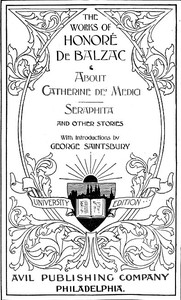
The Works of Honoré de Balzac: About Catherine de' Medici, Seraphita, and Other…
I’ll be honest, when I first picked up this collection, I was a bit intimidated. Balzac? Seventeen-ninety-nine? But then I cracked it open, and it was like hearing a old friend spill tea they’d been saving for centuries.
The Story
The book is built around two very different—but equally wild—tales. First up is "About Catherine de' Medici." Forget the simple "evil queen" stuff. Balzac imagines Catherine as a walking paradox: a woman ruling in a man's world, a foreigner navigating a paranoid French court, and a Catholic queen trying to calm fanatical Catholics and angry Protestants. The main question is: did she plan the St. Bartholomew's Day Massacre, or did she get caught in a hurricane she couldn't control? Balzac goes for the complicated answer, showing her as a mother terrified for her sons, a ruler doing deals with shady characters, and a person who became ruthless because she had no other choice.
Then you get Seraphita, and . . . buckle up. This one is how religious mysticism and "what even is gender?" cranked up to eleven. Seraphita (who shifts from looking male to female, depending on who’s looking) guides two potential lovers through dark forests, conversations about souls, and some trippy, philosophical speeches. It’s part romance, part fantasy, part meditation on whether a pure heart can rise above the messy human world.
Why You Should Read It
I wasn’t expecting a real emotional gut punch, but both stories hit me hard. The Catherine section made me rethink everything I thought I knew about strong women in history—she wasn’t a proto-feminist. She was desperate, smart, scared, and made terrible mistakes. That feels less like a lesson and more like a mirror.
And Seraphita? It was strange at first, but it stuck with me. Balzac isn't just telling a ghost story; he's asking "what if love wasn’t about bodies or genders, but about meeting another person’s soul?" It’s wrapped in 1800s spiritual talk, but the core feeling—like longing, but for something beyond earth—felt really relatable in a weird, beautiful way.
Final Verdict
If you love history but hate dry textbooks, get this. It’s like stepping into an animated salon in 1840s Paris and gossiping with Balzac himself. You’ll come away asking yourself big questions about power and love. This isn’t for someone wanting a quick, light read—it’s for readers who aren’t afraid to be confused, challenged, and really moved.
This text is dedicated to the public domain. It is now common property for all to enjoy.