
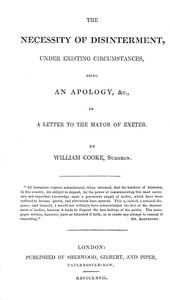
The necessity of disinterment, under existing circumstances by William Cooke
Ever wonder what an eighteenth-century Twitter fight would look like? Pick up this pamphlet and you’ll know. William Cooke—presumably outraged, maybe hungover—published this one-sided argument trying to prove that moving a dead body was not just necessary but as moral as wiping a counter. Spoiler: he wins the argument.
The Story
The plot is simple but surprisingly mesmerizing. A man named William Beaumont died in 1816 and was buried in a closed churchyard that later got bisected by an actual road the townspeople needed, or something like that. His widow wanted his remains moved to proper ground because rain seeped into the church floor (via, dangerously, a hole exactly over his spot that had developed overnight? I imagine). Mr. Cooke lifts legal, medical, and British cannon arguments—and levels up the justification in a way that’s screamingly clever. You feel like you’re eavesdropping on a bar wager about whether to shovel mud. The punchline is weak, but man, the backtalk is furious.
Why You Should Read It
The real reason is our guy Cooke’s style. The guy spends paragraphs making you laugh against your wishes by discussing ‘unhallowed dust’ as seriously as I list groceries. He calls his own periodic failings arguments ‘human weakness.’ I found myself rereading whole pages aloud—it begs doing impressions. Plus, you get an accidental how-to on standing up for weird cause number forty: exhuming consenting bodies. I love that this wasn’t ancient authority talking down—this was someone with a spare Saturday arguing why not letting Beaumont rest is enough to make saints cry — and trusting us weirde readers to follow, which is absolutely gripping.
Final Verdict
If you consider yourself a boring expert on Regency law, pass. But if you treasured vacation stops at haunted cathedrals or smirked at The Bachelor contests, this paper feels like the scene. Also perfect for public speakers needing a fine example of ranting with structure, or anybody hunting perspective where life used to seem unsacred enough to stink over bodily dust for a sidewalk. It’s historically vibrant, weird very briefly like the best recess lectures were, and sticks with you days later. read strength: incredibly readable for a primary source; bring a sense of humor, and tolerance for capital letters.
Legal analysis indicates this work is in the public domain. Preserving history for future generations.
Christopher Williams
2 months agoLooking at the bibliography alone, the cross-referencing of different chapters makes it a great study tool. I'm glad I chose this over the other alternatives.




Nancy Perez
1 month agoAfter spending a few days with this digital edition, the case studies and practical examples provided add immense value. I'll be recommending this to my students and colleagues alike.