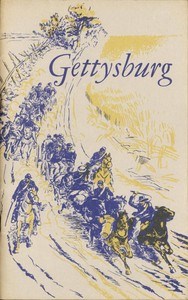
Gettysburg National Military Park, Pennsylvania by Frederick Tilberg
You know that feeling when a piece of history gets stuck in your head? For me, it's always been Gettysburg. And Tilberg's little guide is the reason. It's older than most travel books, but that’s what makes it special. No wild theories here—just a direct, honest look at what happened where your feet might stand.
The Story
Tilberg breaks down the battle like a pro showing you a haunted house. He doesn't waste time on fancy writing; he starts you in town, then walks you to McPherson Ridge, where the first confusion hit the Union troops on July 1st. He's got a map in one hand and a heartbeat in the other. As he points out the sites—Devil's Den where sharpshooters hid, the Railroad Cut where men died in a ditch—he explains the deadly game of cat and mouse between armies. Then comes July 2nd, the vicious fighting for Little Round Top and the infamous “Bloody Wheatfield.” Finally, he lays the whole thing at Pickett’s Charge on July 3rd: the sheer, open nightmare of 12,000 men walking uphill into cannon fire. The plot is simple—three days of terror—but his map points *show* why each hill, each fence, mattered like a twist in a movie.
Why You Should Read It
This is a guide for daydreamers, not just tourists. Yes, you could read it while walking the park. But honestly, read it in your armchair with YouTube open. When Tilberg talks about the Oak Ridge fighting, you see in your mind how quickly pride became panic. The best part? He makes you care about unnamed soldiers. He calls them the men from Maine, New York, Mississippi. That hit me hard in my heart. It's not about stats—though there are some big numbers—it’s about us. You realize a country acts on hope. You start asking yourself, “What would I do under that Rebel yell?” The themes are quiet and massive: courage, misunderstanding, the terrible cost of principle. It turns a list of monuments into a raw human story.
Final Verdict
Perfect for history buffs, future tourists, or anyone who looked at a field and knew things changed there. If you love clear, direct explanation with just a little bit of dignity, grab this. Yes, get a more current map for roads, but for *feeling* why war is a wound in a particular piece of ground, no book comes closer.
No rights are reserved for this publication. Use this text in your own projects freely.